Manufacturer source check
Manufacturer sources checked 24 September 2026.
- Elongation at break: The 400% figure is elongation at break in the ISO 37 test. It is not a ±400% joint-movement rating or a safe working extension.
- Paintability: Water-based paint after 24 hours; use a water-based primer before oil-based paint and pre-test compatibility. Paint readiness is not full cure.
- Cure rate: TDS: 3 mm per 24 hours; cure slows in low humidity or between non-porous surfaces. The retail page lists three days, which is not a universal full-cure guarantee.
- Support and spacing: TDS: support heavy materials for at least four hours, cure fully before loading and use mechanical fasteners for high stress. TDS broad-surface bead spacing is at least 15 cm; retail directions say 5 cm. Confirm the matching instructions with Selleys.
What is Selleys Liquid Nails Flex, and where should you use it?
Selleys Liquid Nails Flex is a flexible construction adhesive built on SMP (silyl modified polymer) chemistry, designed for demanding jobs that need a strong, long-lasting bond in a joint that will not sit still. It adheres to porous, non-porous and damp surfaces, it accommodates high movement transferred from the substrates while keeping bond integrity, and once cured it creates a water-resistant seal. It works indoors and out, and it remains flexible even in extreme weather conditions.
The characteristic worth knowing before you buy is the 400% elongation at break. Most construction adhesives are chosen for stiffness; Flex is chosen for the opposite. Where a substrate expands, contracts or flexes — a trim on a sun-facing wall, a tile on a surface that moves — a rigid adhesive eventually cracks its own bond line. Flex stretches instead. The trade-off is that it is a moisture-curing product, so it needs atmospheric moisture to cure and it slows down on non-porous substrates or in low humidity.
Technical specification
| Property | Typical result |
|---|---|
| Technology | SMP (silyl modified polymer) |
| Cure mechanism | Moisture curing |
| Appearance and colour | Smooth white paste |
| Specific gravity | 1.48 |
| Skin time | 18 minutes |
| Curing rate | 3mm per 24 hours |
| Initial set time | Approximately 4 hours |
| Application temperature | +5 °C to +40 °C |
| Service temperature | -20 °C to +70 °C |
| Storage temperature | +5 °C to +27 °C |
| Shore A hardness (ASTM C661) | 39 |
| Tensile strength (ISO 37) | 2.28 MPa |
| Shear strength on timber (AS 2329 (E)) | 1.33 MPa |
| Elasticity modulus (ISO 37) | 0.99 MPa |
| Elongation at break (ISO 37) | 400% |
| VOC (ASTM D3960) | 14 g/L |
| Gap bridging | Up to 9mm |
| Paintable | Water-based paint, after 24 hours |
| Packaging | 430 g cartridge, white (item code 104265) |
| Shelf life | 12 months unopened |
These results are based on the current product material data, quality test methodology and testing conditions such as temperature, moisture and substrate type. Treat them as indicative rather than as specification values.
What the key numbers mean in practice
Curing rate of 3mm per 24 hours is the number most often misread. It does not mean the bead is finished in a day — it means the adhesive cures inward at roughly 3mm every 24 hours as atmospheric moisture reaches it. A thin bead in a well-ventilated spot is through-cured quickly; a thick bead sandwiched between two sealed surfaces takes considerably longer, because the moisture has further to travel. The technical data sheet is explicit that on non-porous substrates or in low-humidity conditions, curing speed slows.
TDS: support heavy materials for at least four hours, cure fully before loading and use mechanical fasteners for high stress. TDS broad-surface bead spacing is at least 15 cm; retail directions say 5 cm. Confirm the matching instructions with Selleys.
Elongation at break of 400%, Shore A 39 and an elasticity modulus of 0.99 MPa together describe a soft, stretchy cured bond rather than a hard one. Low modulus means the adhesive transmits less stress back into the substrate as the joint moves, which is what protects a brittle material like a tile or a stone trim from cracking at its edges.
Skin time of 18 minutes sets your working window, and the application instructions tighten it further: press the material to the opposite surface within 10 minutes, and reposition before skin formation. Once the skin has formed, moving the part breaks the contact you have already made.
Bridges gaps up to 9mm means the bead keeps working across an uneven substrate rather than leaving the part bridging a void. Beyond 9mm you are outside the rated range.
Coverage from a 430 g cartridge
Linear joint estimates for one 430 g cartridge, by nozzle inner diameter:
| Nozzle opening | Approximate length |
|---|---|
| 5mm | 14.7 m |
| 6mm | 10.2 m |
| 8mm | 5.7 m |
| 9mm | 4.5 m |
| 10mm | 3.6 m |
| 12mm | 2.5 m |
| 15mm | 1.6 m |
| 20mm | 0.9 m |
These are theoretical calculations without wastage. Allow at least 10% for wastage when you are working out how many cartridges to buy — and note how steeply the coverage falls as the nozzle opening grows. Doubling the bead from 5mm to 10mm cuts your run from roughly 14.7 metres to 3.6 metres.
Where to use it
The data sheet nominates Flex for:
- Bonding for internal and external applications
- Bonding and fixing common building and construction materials such as tiles, natural stones, trims and timber
- Bonding materials where flexibility is required, and where the adhesive needs to bridge up to a 9mm gap
- Bonding materials onto a damp surface
Substrates
Porous: timber and plywood, weatherboard, plasterboard, fibre reinforced cement, bricks, concrete, masonry, sandstone, AAC (Hebel) and terracotta.
Non-porous: aluminium, copper, zinc alum, steel and stainless steel, mild and galvanised steel, powder-coated steel, PVC, polycarbonate, EPS and ceramic tiles.
Pre-test compatibility with substrates before use — this applies to every material on the list, and particularly to powder-coated steel, which the data sheet flags with a caveat.
How to apply it
- Prepare the surfaces. Ensure all surfaces to be bonded are clean, sound and free of dust, oil, rust and other contaminants. On remedial work, remove all existing adhesives or sealants first.
- Clean non-porous surfaces properly. Use a clean cloth dampened with IPA or white spirit, wiping in one direction only, then immediately follow with a clean, dry cloth. Wiping back and forth just redistributes the contamination.
- Prepare the cartridge. Cut the cartridge tip, screw on the nozzle and trim it to the desired bead size, then insert the cartridge into the caulking gun. Use a good-quality gun — a high-thrust-ratio caulking gun is best for high-viscosity products like this one.
- Apply a continuous bead to the bonding surface. On wide or broad surfaces, space the beads at least 15 cm apart.
- Press the material firmly to the opposite surface within 10 minutes. Reposition as needed before skin formation.
- Support heavy material temporarily. Let the adhesive set for at least 4 hours before removing supports. Use mechanical fasteners for high-stress applications.
- Allow the adhesive to cure completely before applying any load.
Painting over it
Flex is paintable with water-based paint after 24 hours. It may affect the drying of alkyd and oil-based paints, so for an oil-based system apply a water-based primer first. A pre-test is recommended given the range of paint types on the market.
Limitations — where Flex should not be used
- Do not apply if the ambient or substrate surface temperature is below +5 °C or above +40 °C.
- Do not use for applications outside -20 °C to +70 °C in service. The page copy states the same restriction as "not suitable for rooftops or surfaces exceeding 70 °C".
- Not recommended for continuous submersion or below water line use. Water-resistant once cured is not the same as immersible.
- Do not use for structural or general glazing.
- Do not use as the sole support for structural or overhead applications.
- Avoid using in tightly clamped joints, for example cabinetry or joinery.
- Avoid contact with materials containing high levels of plasticisers, such as rubber and bituminous substrates.
- Not for use on polyethylene, polypropylene or PTFE (Teflon). The product page extends this exclusion list to ABS, nylon, PMMA and some rubbers as well — treat the longer list as the one to work to.
- Longer cure times occur in cold, dry or low-porosity conditions. The adhesive requires atmospheric moisture to cure.
- Pre-test all substrates for compatibility. Selleys asks users to conduct their own risk assessment and apply a sample to the intended area to confirm appearance, finish and performance.
Clean up and storage
Excess adhesive on tools and equipment can be removed with turps. Cured adhesive has to be removed mechanically, or with Selleys Sealant Remover.
Store unopened packaging below 27 °C in a cool, dry place away from direct sunlight, and use it within 12 months of manufacture. An opened cartridge will skin and form a lump near the opening — discard the lump and skin, then use the remaining product. If the cartridge has been stored below the recommended storage temperature, warm it to the application temperature range before use, or it will be difficult to gun and slow to grab.
Standards
- ASTM D3960 — Standard Practice for Determining Volatile Organic Compound (VOC) Content of Paints and Related Coatings
- AS 2753:2018 — Adhesives for Bonding Gypsum Plaster Linings to Wood and Metal Framing Members
- AS 2329:1999 (E) — Mastic Adhesives for Fixing Wallboards
Hazard classification
Classified as hazardous under Safe Work Australia GHS 7, with the signal word Warning.
- Eye damage/irritation — Category 2A. H319: causes serious eye irritation.
That is the complete classification — one category, one hazard statement. Liquid Nails Flex is not classified as Dangerous Goods under the Australian Code for the Transport of Dangerous Goods by Road & Rail, New Zealand NZS5433, the IMDG Code for sea transport or the IATA regulations for air transport.
The precautionary statements on the label are P102 and P103 (keep out of reach of children; read and follow all instructions), P264 (wash hands, face and all exposed skin thoroughly after handling), P280 (wear protective gloves and clothing, including eye and face protection), P101 (if medical advice is needed, have the container or label to hand), P305+P351+P338 and P337+P313 for eye contact.
Low VOC and absence of a solvent carrier do not establish that a product is harmless. Follow the matching SDS and label for exposure controls.
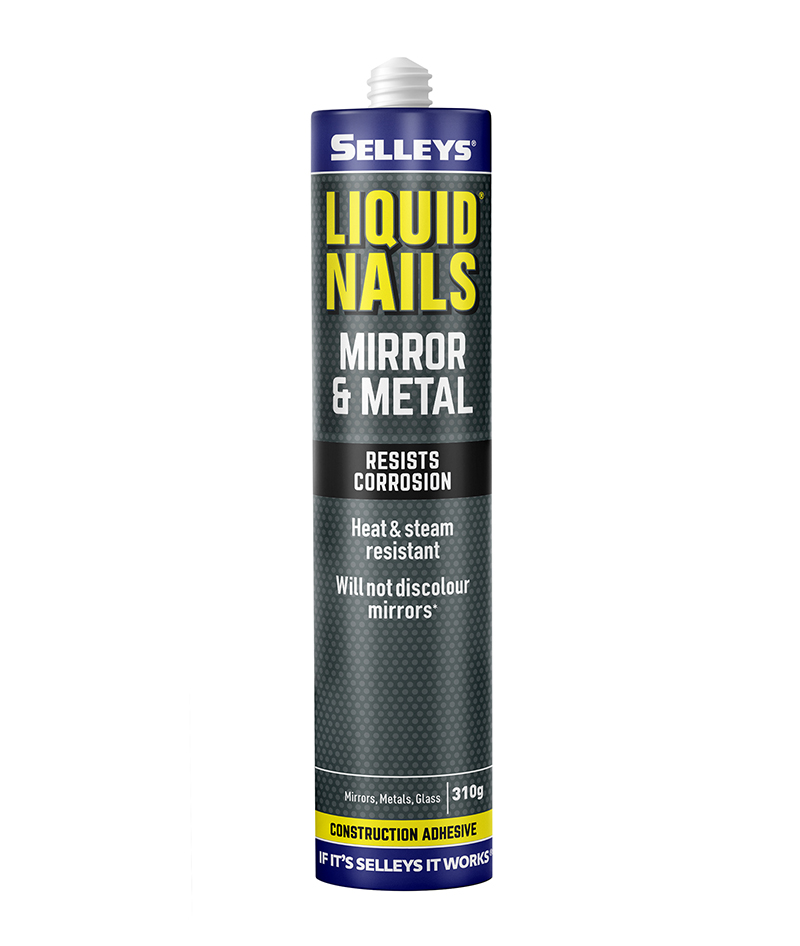
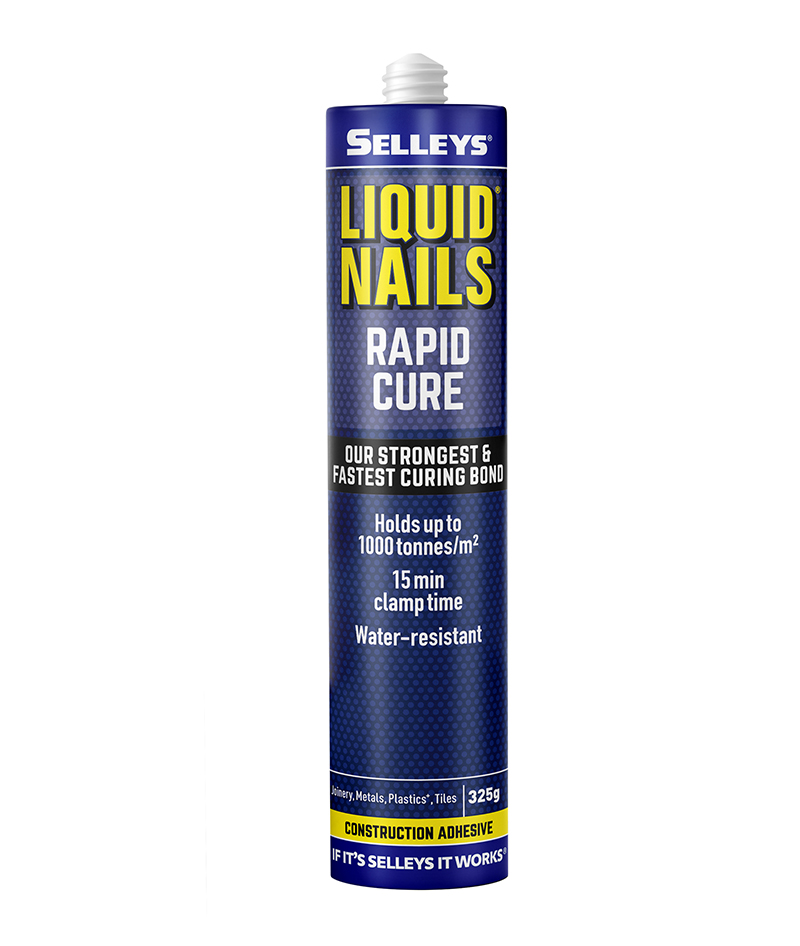
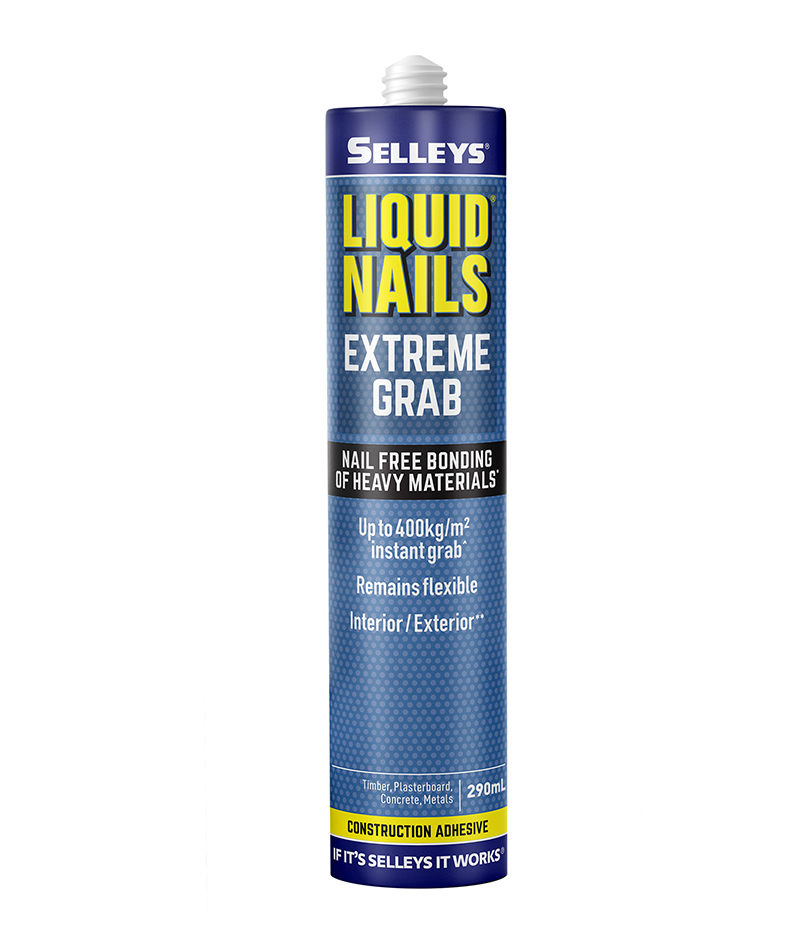
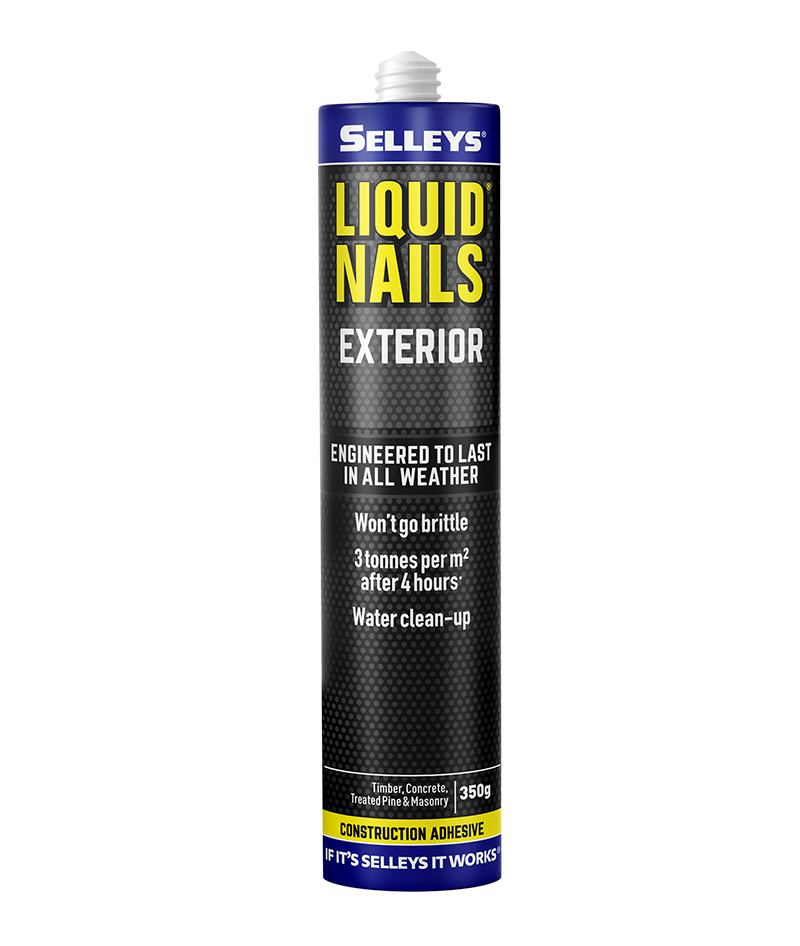
Notably, Flex carries no skin sensitisation classification — unlike Liquid Nails Exterior, Extreme Grab, Mirror & Metal and Hold Up, which are all Category 1 sensitisers. That is a genuine difference and not an oversight, and for a tradesperson using an adhesive day in and day out it is the most consequential thing on this page: sensitisation is the hazard that accumulates and does not go away.
What remains is the eyes, and Category 2A is serious irritation rather than damage. The realistic exposure is not a splash from the cartridge but the uncured paste transferred to a finger and then to an eye, or a bead squeezed out under pressure while a panel is pressed home. Wash your hands before you rub your face, and the practical risk is largely gone.
Protection
- Eye protection — safety glasses. This is the one classified hazard, so it is the one control that is not optional.
- Gloves — nitrile rubber is indicated for intermittent contact; make your own final assessment for your conditions and glove construction.
- Clothing — overalls and safety shoes. Wash contaminated clothing and protective equipment before storing or reusing.
- Wash hands, face and exposed skin thoroughly after handling, and before eating, drinking, smoking or using the toilet.
First aid
| Exposure | What to do |
|---|---|
| Eyes | Rinse cautiously with water for several minutes, removing contact lenses if present and easy to do, then keep rinsing. Hold the eyelids apart and flush continuously — until told to stop by the Poisons Information Centre or a doctor, or for at least 15 minutes — then go to a doctor or hospital. If eye irritation persists, get medical advice. |
| Skin | Remove contaminated clothing immediately and flush skin and hair with running water. If swelling, redness, blistering or irritation develops, seek medical assistance. |
| Inhalation | Move the person to fresh air without becoming a casualty yourself. Loosen tight clothing, let them rest comfortably and keep them warm until fully recovered. Seek medical advice if effects persist. |
| Swallowed | Rinse the mouth with water. Do NOT induce vomiting. Give a glass of water. Never give anything by mouth to an unconscious person. Seek medical advice. |
If poisoning occurs, contact a doctor or the Poisons Information Centre — 131 126 in Australia, 0800 764 766 in New Zealand — with the container to hand. Selleys emergency line: 1800 220 770 in Australia, 0800 220 770 in New Zealand.
What is Selleys Liquid Nails Flex?
Selleys Liquid Nails Flex is a premium flexible construction adhesive from Selleys, designed to provide the best bonding for tough jobs on materials such as metal, wood, and more.
What technology is used in Selleys Liquid Nails Flex?
Selleys Liquid Nails Flex uses SMP (Silyl Modified Polymer) technology with a moisture curing mechanism.
How flexible is Selleys Liquid Nails Flex once cured?
The 400% figure is elongation at break in the ISO 37 test. It is not a ±400% joint-movement rating or a safe working extension.
What gap bridging capacity does Selleys Liquid Nails Flex have?
Selleys Liquid Nails Flex can bridge gaps up to 9mm.
Is Selleys Liquid Nails Flex water resistant?
Yes, Selleys Liquid Nails Flex provides a water-resistant seal once fully cured.
What is the VOC content of Selleys Liquid Nails Flex, and is it suitable for indoor use?
Selleys Liquid Nails Flex has a low VOC content of 14 g/L, making it suitable for indoor use.
What surfaces can Selleys Liquid Nails Flex bond to?
Selleys Liquid Nails Flex bonds to porous, non-porous, and damp surfaces, including materials like timber, plywood, bricks, sandstone, terracotta, aluminium, copper, various types of steel, concrete, plasterboard, masonry, ceramic tiles, PVC, polycarbonate, EPS, AAC (Hebel), fibre reinforced cement, weatherboard, and zinc alum.
What is the application temperature range for Selleys Liquid Nails Flex?
Selleys Liquid Nails Flex should be applied within a temperature range of +5°C to +40°C.
What is the skin time and curing rate of Selleys Liquid Nails Flex?
TDS: 3 mm per 24 hours; cure slows in low humidity or between non-porous surfaces. The retail page lists three days, which is not a universal full-cure guarantee.
Can Selleys Liquid Nails Flex be painted after application?
Water-based paint after 24 hours; use a water-based primer before oil-based paint and pre-test compatibility. Paint readiness is not full cure.
Images on This Page
-
https://www.selleys.com.au/media/cseezadf/selleys-logo-tagline_752x360.png?rmode=boxpad&ranchor=center&width=188&height=90&format=webp&quality=90
Selleys: Adhesives | Sealants | Putty Fillers | Glues | Cleaning Products - Australia
-
https://www.selleys.com.au/images/productpagev2/loading.gif
(no alt text)
-
https://www.selleys.com.au/media/kpebiym0/flex-fop.jpg?rmode=max&ranchor=center&width=440&height=440&format=webp&quality=90
https://www.selleys.com.au/media/kpebiym0/flex-fop.jpg?rmode=max&ranchor=center&width=800&height=800&format=webp&quality=90
-
https://www.selleys.com.au/media/g0yb4tva/flex-features.png?rmode=max&ranchor=center&width=440&height=440&format=webp&quality=90
https://www.selleys.com.au/media/g0yb4tva/flex-features.png?rmode=max&ranchor=center&width=800&height=800&format=webp&quality=90
-
https://www.selleys.com.au/media/e0yjssjg/flex-bop.jpg?rmode=max&ranchor=center&width=440&height=440&format=webp&quality=90
https://www.selleys.com.au/media/e0yjssjg/flex-bop.jpg?rmode=max&ranchor=center&width=800&height=800&format=webp&quality=90
-
https://www.selleys.com.au/media/cfblelq2/substrates-all-together.png?rmode=max&ranchor=center&width=440&height=440&format=webp&quality=90
https://www.selleys.com.au/media/cfblelq2/substrates-all-together.png?rmode=max&ranchor=center&width=800&height=800&format=webp&quality=90
-
https://www.selleys.com.au/media/kjslkqhx/suitable-substrates_01.png?rmode=max&ranchor=center&width=440&height=440&format=webp&quality=90
https://www.selleys.com.au/media/kjslkqhx/suitable-substrates_01.png?rmode=max&ranchor=center&width=800&height=800&format=webp&quality=90
-
https://www.selleys.com.au/media/5n4llvjc/suitable-substrates_02.png?rmode=max&ranchor=center&width=440&height=440&format=webp&quality=90
https://www.selleys.com.au/media/5n4llvjc/suitable-substrates_02.png?rmode=max&ranchor=center&width=800&height=800&format=webp&quality=90
-
https://www.selleys.com.au/media/a5rlsnf0/suitable-substrates_03.png?rmode=max&ranchor=center&width=440&height=440&format=webp&quality=90
https://www.selleys.com.au/media/a5rlsnf0/suitable-substrates_03.png?rmode=max&ranchor=center&width=800&height=800&format=webp&quality=90
-
https://www.selleys.com.au/media/qosagvay/suitable-substrates_04.png?rmode=max&ranchor=center&width=440&height=440&format=webp&quality=90
https://www.selleys.com.au/media/qosagvay/suitable-substrates_04.png?rmode=max&ranchor=center&width=800&height=800&format=webp&quality=90
-
https://www.selleys.com.au/media/v04kmv5r/selleys-liquid-nails-range-shot.png?rmode=max&ranchor=center&width=440&height=440&format=webp&quality=90
https://www.selleys.com.au/media/v04kmv5r/selleys-liquid-nails-range-shot.png?rmode=max&ranchor=center&width=800&height=800&format=webp&quality=90
-
https://www.selleys.com.au/images/productpagev2/pdp-share-icon.png
Share
-
https://www.selleys.com.au/media/a0odjhyl/liquid-nails-brand-page_original.jpg
Liquid Nails Original
-
https://www.selleys.com.au/media/0yjpfagv/ln-fast.jpg
Liquid Nails Fast Grab
-
https://www.selleys.com.au/media/vqql3dn0/ln-heavy-duty.jpg
Liquid Nails Heavy Duty
-
https://www.selleys.com.au/media/mgqnpcuz/ln-landscape.jpg
Liquid Nails Landscape
-
https://www.selleys.com.au/media/tp3pnb2f/ln-mirror-metal.jpg
Liquid Nails Mirror & Metal
-
https://www.selleys.com.au/media/4rlb3jns/ln-rapid-cure.jpg
Liquid Nails Rapid Cure
-
https://www.selleys.com.au/media/jeyktnic/ln-extreme-grab.jpg
Liquid Nails Extreme Grab
-
https://www.selleys.com.au/media/0gmbrtku/ln-exterior.jpg
Liquid Nails Exterior
-
https://www.selleys.com.au/media/0odk5pu3/ln-clear.jpg
Liquid Nails Clear
-
https://www.selleys.com.au/media/cbblla3l/d7da48d64e7c677f17c23efbe8695d38dc36d225.jpg?rmode=crop&ranchor=center&width=524&height=350&format=webp&quality=90
/media/cbblla3l/d7da48d64e7c677f17c23efbe8695d38dc36d225.jpg
-
https://www.selleys.com.au/media/hsfels15/db9d55bd3617f31d27df2749e0d457a5c7b2f25b.jpg?rmode=crop&ranchor=center&width=524&height=350&format=webp&quality=90
/media/hsfels15/db9d55bd3617f31d27df2749e0d457a5c7b2f25b.jpg
-
https://www.selleys.com.au/media/dtkhvo45/4173f8a994aa2fc47a67a8465757dc698057be06.jpg?rmode=crop&ranchor=center&width=524&height=350&format=webp&quality=90
/media/dtkhvo45/4173f8a994aa2fc47a67a8465757dc698057be06.jpg
-
https://www.selleys.com.au/media/cklbfgv1/601c6a32cdd1940b86ed627419d422d420a64132.jpg?rmode=crop&ranchor=center&width=524&height=350&format=webp&quality=90
/media/cklbfgv1/601c6a32cdd1940b86ed627419d422d420a64132.jpg
-
https://www.selleys.com.au/media/hjjjkqpc/selleys-liquid-nails-banner.jpg?rmode=crop&ranchor=center&width=614&height=353&format=webp&quality=90
About Liquid Nails